
#44 Compromise
Rückblick auf hitzige politische Debatten in Deutschland 2025 (Haushalt, Rentenpaket, Wehrpflicht). Mit dem Staatsrechtler Oliver Lepsius wird der Kompromiss als Technik gegenseitigen Nachgebens definiert, durch die man Mehrheiten gewinnt, ohne die eigene Überzeugung aufzugeben.
#43 Investing During a Crisis?
Eine Langzeitstudie von Ranjay Gulati (Harvard) an rund 5.000 Unternehmen zeigt: Nur 9 Prozent kamen gestärkt aus früheren Krisen – jene, die Kostensenkung mit gezielten Investitionen kombinierten. Eine AlixPartners-Studie zur Corona-Zeit (2019–2024) bestätigt den fehlenden Zusammenhang zwischen reinem Kostensparen und Unternehmenswert.
#42 Progress Through Chaos
Mit Bezug auf Carl Benedikt Freys Buch „Wie Fortschritt endet“ und Daron Acemoğlu wird die Abfolge von dezentralem Experimentieren und zentraler Skalierung beschrieben – von der Dampfmaschine über mRNA/BioNTech bis zu Googles ungenutzter Transformer-Erfindung, aus der später OpenAI entstand.
#41 Management and Supervision of Companies
Ausgehend von Zitaten aus Geschäftsführung und Aufsichtsrat („Uns hört keiner zu“) werden vier Fragen definiert, die jedes Beiratsmitglied beantworten können muss (Kundenbedürfnis, Wettbewerber, Profitabilität, Bedrohungen), dazu ein zwei- bis dreijähriger Strategiezyklus.
#40 AI doesn't change the way we work. AI changes what work is.
Organizations are stuck on the operational “how” of AI implementation—but AI demands a different way of thinking: moving away from rigid plans toward strategic judgment and continuous learning. Those who curate knowledge and put people at the center—rather than getting lost in perfection and control—are the ones who succeed. Standing still is the greatest risk in an era when AI is fundamentally transforming work.
#39 Optimism
Dem in Medien verbreiteten Pessimismus (FT-Bericht über marode Infrastruktur, Süddeutsche-Umfrage zu Zukunftsängsten von Jugendlichen) werden Daten zu steigender Lebenserwartung und sinkender Armut sowie Viktor Frankls Konzept kleiner Fortschrittsschritte gegenübergestellt.
#38 It's the culture, stupid!
Many hope that AI will make work easier through automation. But fears and burnout persist when there is a lack of cultural change. Only by creating space for curiosity and collaborative experimentation can AI truly be effective in the workplace.
#37 A Lackluster Culture of Discussion
Meetings are often seen as time-wasters—despite countless tips and tools. The real key often lies elsewhere: in a better culture of discussion and the example set by leaders.
#36 Dealing with Daily Setbacks
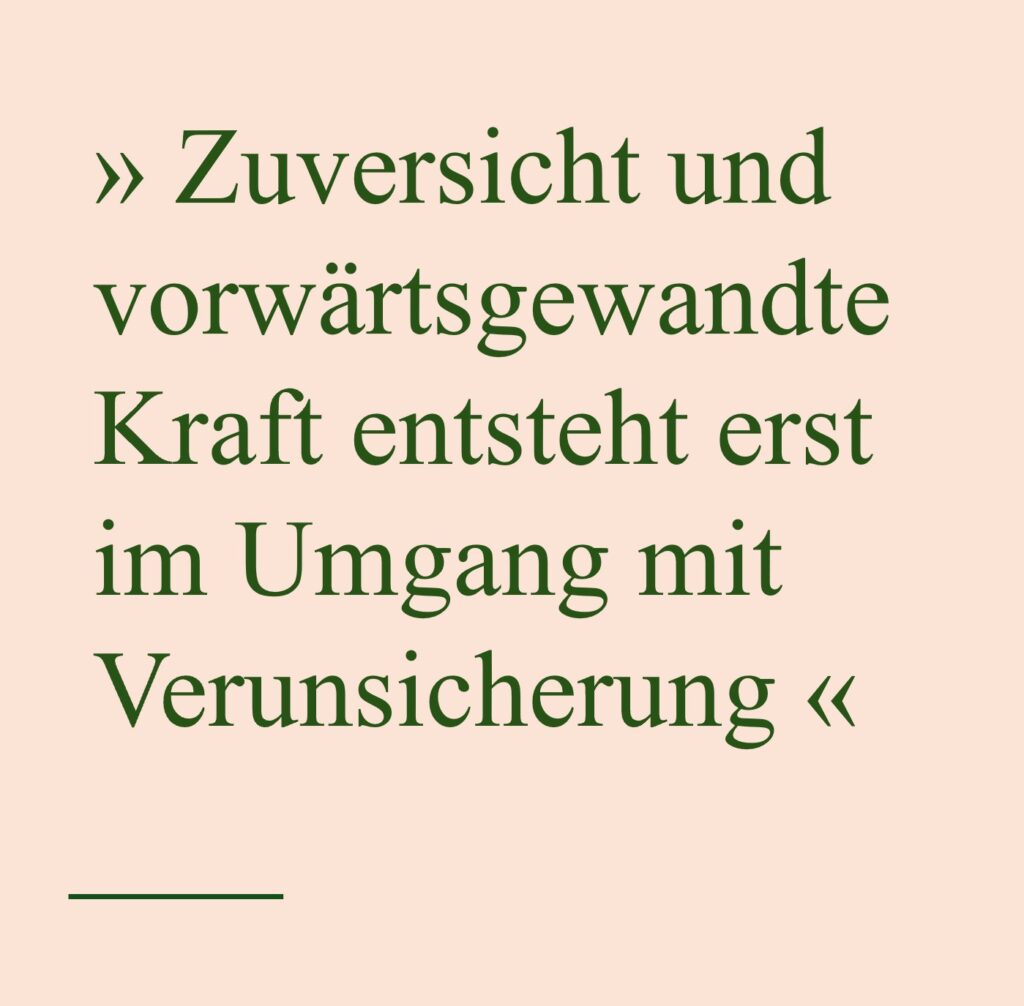
Leaders are now called upon to exude courage and open up new possibilities—even though they themselves often don't know exactly where things are headed.
From Insight to Action: Smart Questions as a Compass for the Future

In uncertain times, the temptation is great: Companies try to make the future tangible through forecasts that are as accurate as possible and base their strategic decisions on them. The problem is that these forecasts often turn out to be inaccurate—and a linear trend that we can predict is no longer the future, and probably never was.