Operating costs must be reviewed on a regular basis. Changing market conditions, new tasks and ways of working, and the inertia inherent in an organization that we must overcome—presence creates work!—all call for a continuous review of our structures.
I recently experienced firsthand what happens when we allow habits to persist for too long and continue to incur costs for the company without asking questions. A newly appointed management team was quite taken aback when an executive explained that, as usual, she would be taking her annual employer-funded training week during the pre-Christmas period—a time that is critical to the success of this manufacturing, export-oriented company. When asked what the training was about given the company’s current difficult situation, she replied that she would be spending a week learning how to take meeting minutes. Seriously?
That same corporate leadership had a hard time convincing its management team to commit to new projects amid declining order volumes and looming trade barriers with the U.S. Their argument: “Right now, more than ever, we need new initiatives that will keep us relevant in a changed market two years from now.” But the uncertainty among executives is as great as the number of skeptics. The general lament about Germany as an industrial hub and the decline of the German machinery industry is echoed in corporate boardrooms.
If we don’t want to bring about our own downfall, we should take a more critical look at bad news. Those who look further ahead recognize that Germany has the potential to be at the very forefront. In an interview with *Die Zeit*, economic historian Sven Beckert explains, on the occasion of the launch of his new book on the history of capitalism: “Germany is one of the few countries in the world that still has a truly deep industrial structure. The current pessimism in Germany is therefore completely exaggerated.”
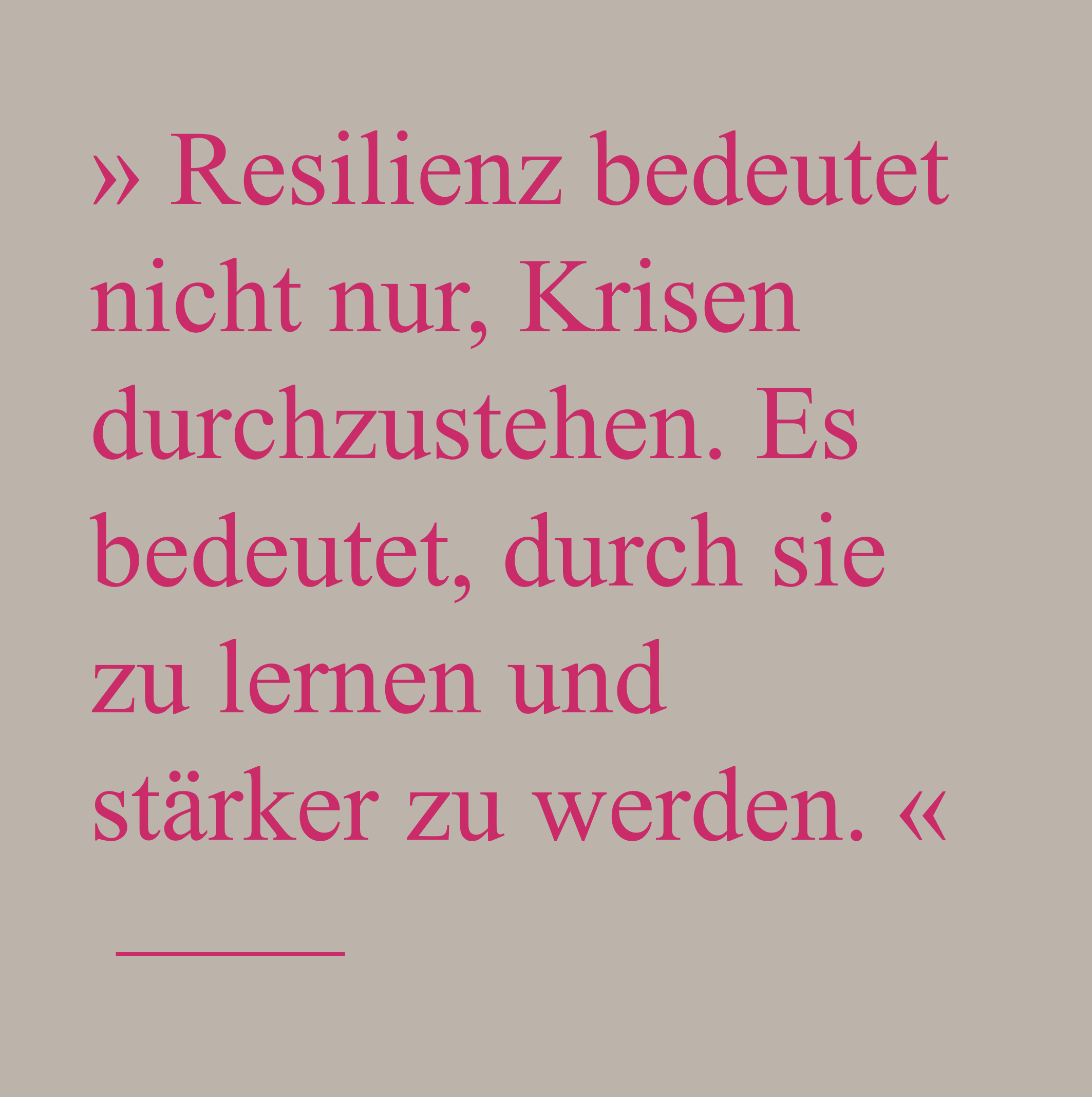
Cost-cutting alone won’t get us very far in the current crisis. Only those who simultaneously invest in new initiatives at the core of their industrial operations will grow. Resilience—that much-used word—doesn’t just mean weathering crises. It means learning from them and emerging stronger. Companies that reposition themselves in the wake of crises demonstrate that future viability arises when companies have the courage to recognize the value of time and when carefully weighed, prioritized investments outweigh the fear of loss.
Where are you cutting back, and where are you investing? And what kinds of resistance are you encountering?
Feel free to write to me.
Warm regards
Yours, Markus Baumanns