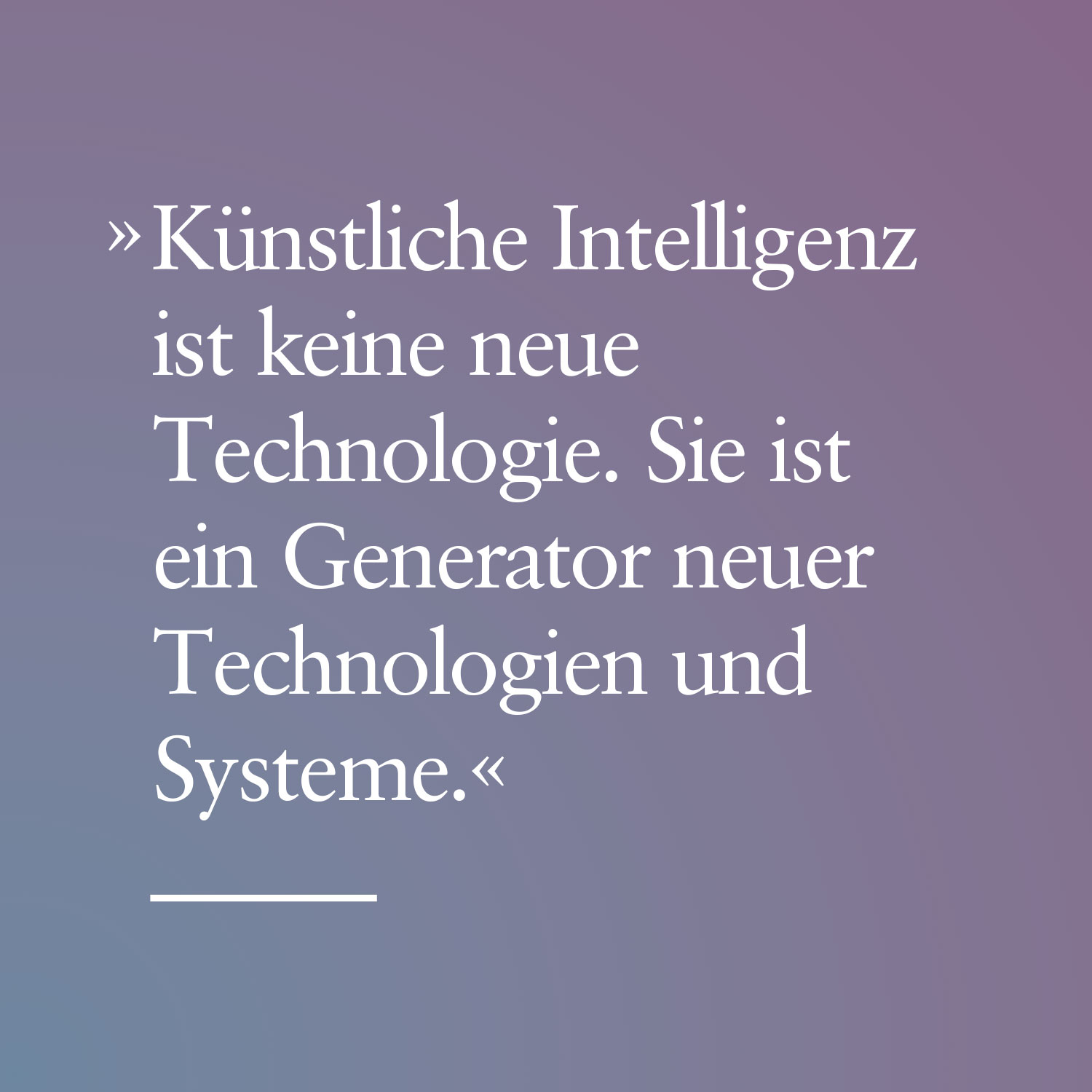
Michael Jabbour, CIO of Education at Microsoft, explained it this way last week at a boot camp at Stanford Graduate School of Business: Innovation has always been the clever combination of existing patterns. Algebra emerged from the synthesis of Hindu numerals, Greek geometry, and Babylonian astronomy. The discovery of the DNA double helix was a puzzle pieced together from known crystallography patterns, chemical insights, and structural hypotheses. In the past, it took years and many teams of experts to identify such patterns and put them to use. Today, AI handles this pattern recognition—in seconds and at low cost. It’s enough to be an expert in one field, then become proficient in cross-domain pattern recognition and fearlessly recombine elements. Value creation no longer lies in knowing “how,” but in answering the question: “What do we want to achieve in the medium to long term? Why are we still in the market?” More than ever, it is strategic skills—rather than operational excellence—that determine success both now and in the future.
However, many organizations still operate as if access to knowledge and pattern recognition were scarce, value-adding assets. They insist on patents, protect their expertise, and develop elaborate training programs.
Others have opened up access—offering AI tools and lowering barriers to entry. But without a smart business model behind them, margins are plummeting. It remains to be seen what OpenAI’s profitable monetization model will be. Or who the value drivers of the future will be, now that Google is powering its search engine with AI and disrupting its advertising business.
Those who succeed are the ones who make curating knowledge the new currency. They no longer sell knowledge, but rather judgment. They know what is crucial in a given context, what really matters, and what helps people move forward. They understand that AI is a helpful framework that does not take away people’s ability to think and make decisions, but rather demands it more than ever.
Example: We at company companions are convinced that traditional consulting services—analysis, structuring, and methodological expertise—have no future in the world of AI. That’s why we’re making our own methods publicly available and using them to develop our own AI agents with licensed access. The goal: to enable companies to design their own strategy and leadership processes. Our value proposition is shifting: from “how” to “what”—listening attentively, observing closely, understanding deeply, actively supporting, and helping to resolve conflicts constructively.
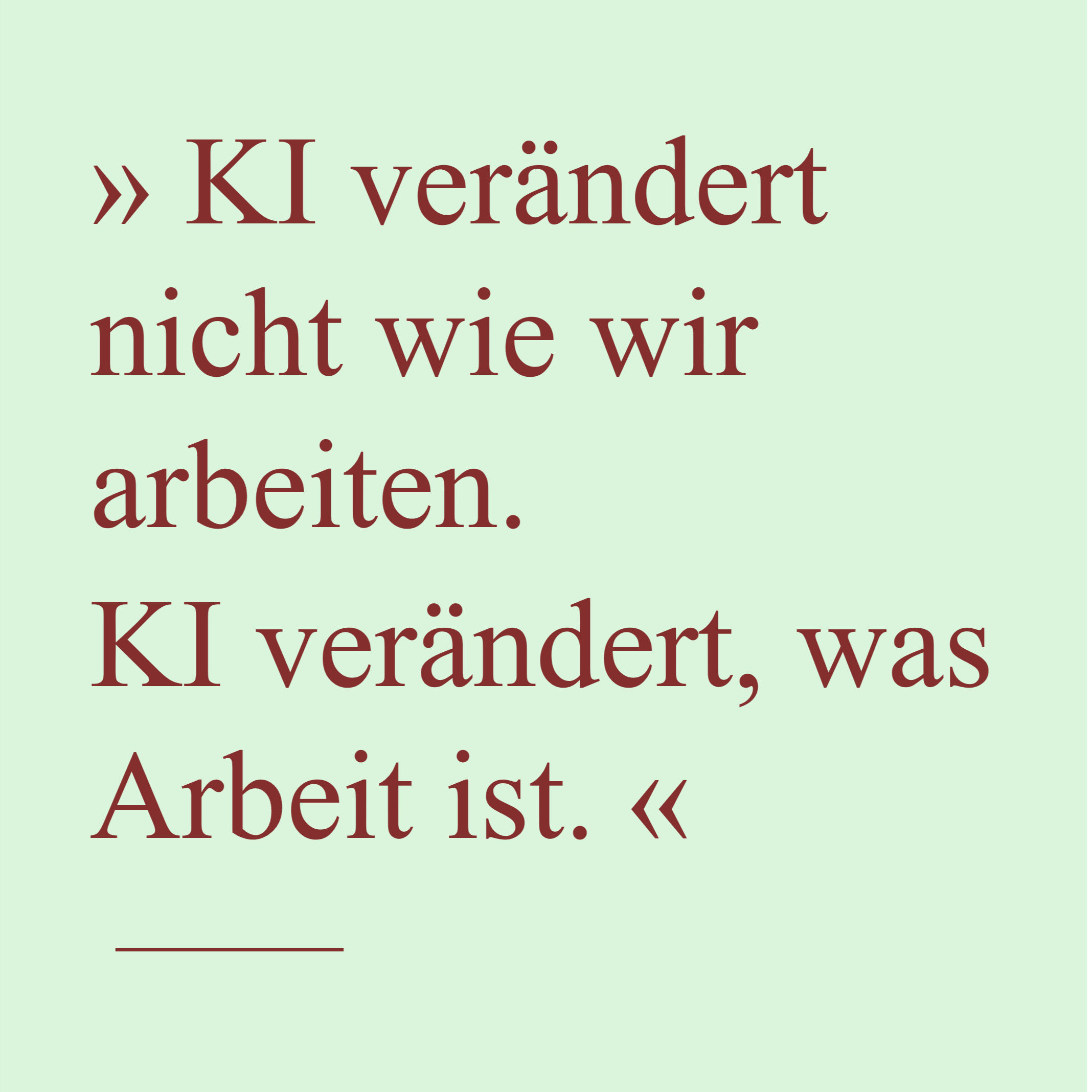
Once again: AI is not a new software solution. AI forces us to move away from thinking in terms of linear processes. That is why a traditional plan focused on the operational “how” won’t get us anywhere.
What we need instead is:
- Speed Over Perfection: Instead of launching a centralized AI project preceded by lengthy preliminary studies, some leadership teams are starting with a weekly “AI Wednesday”: Employees bring in AI applications they’ve tested themselves—from HR, sales, or procurement. The result: Learning takes place in a decentralized, continuous, and context-driven manner.
- Technology and Culture: It’s not enough to simply purchase licenses for AI tools. At a medium-sized mechanical engineering company, for example, every manager was required to work with a GPT agent for one month, document the changes in work processes, and share their findings.
- Practices that learn from mistakes: One organization established an “AI Mistake of the Week” as a regular agenda item in its management meetings. During these sessions, a failed implementation attempt is analyzed—not to assign blame, but as a learning opportunity. This systematic review fosters organizational learning.
- IT leaders who focus on “what” and “people”: One IT leader told me that these days he asks two questions above all else: “What decisions are relevant for us—and what can be eliminated?” and “Who’s interested in experimenting with AI—and who needs guidance?” The focus is shifting from delegating to providing targeted support.
The greatest risk right now isn't being wrong, but remaining stuck in a rut.
How are you shaping the new synergy between AI and IT in your companies and teams?
And here's a quick mini-quiz for IT managers:
- Where in the company are processes still being carried out manually or in Excel that an AI agent could support—have I systematically reviewed this?
- When was the last time I used an AI tool myself to approach my work differently—not faster, but fundamentally differently?
- What decisions do I make on a regular basis that could be supported by data, automated, or delegated—and what’s stopping me from doing so?
If at least two of these questions make you feel uneasy, it’s worth scheduling an appointment for the first “AI Wednesday.”
Yours, Markus Baumanns