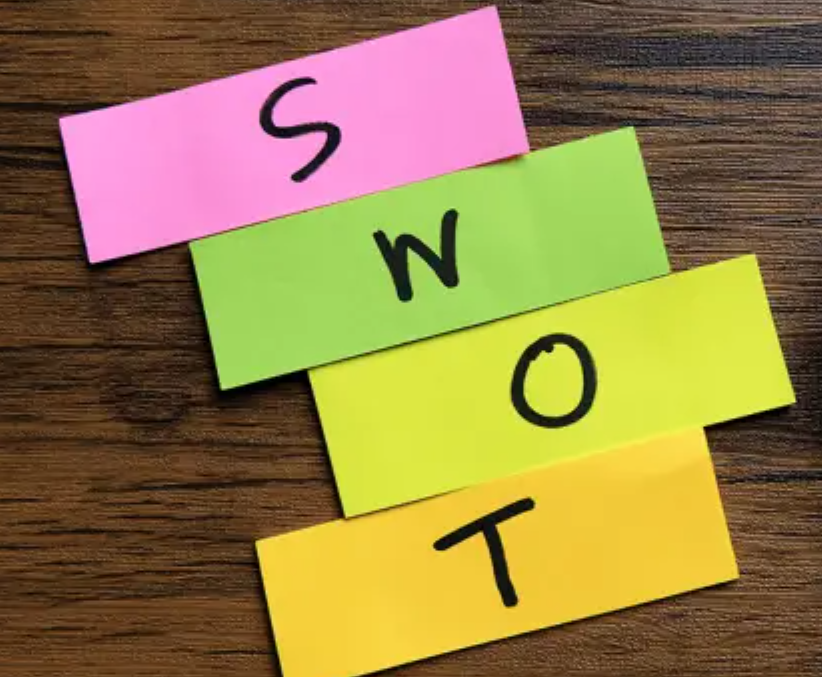
Strategy development? Complex and time-consuming! And precisely because this task is exactly that, we need models that reduce complexity. A tool from the basics of classic management that is both helpful and popular is the SWOT analysis (Strengths, Weaknesses, Opportunities, Threats).
However, the biggest advantage—the high degree of standardization—is also its greatest weakness. That’s why it’s worth expanding the standard set of questions to identify your company’s strengths and weaknesses. You can find some suggestions from our “Playbook Enterprise” here:
Who are our best customers?
It’s worth prioritizing customer perspectives—whether based on revenue, how well our offering meets their needs, or the length of the partnership. The key question is: Why do they work with us—and not with others? The answers reveal our company’s strengths and highlight areas we should focus on developing.
- Make a list of your best customers and identify the common factors that contribute to their success.
What value do we really add?
Companies are most successful when they create clear value for their customers. But often, this isn’t given enough thought. What are customers willing to pay for? And what aren’t they willing to pay for? What sets us apart from our competitors? If you don’t have a clear understanding of your own value proposition, you risk misprioritizing your own values and potential.
- Constantly reevaluate your positioning and optimize your service offerings in a targeted manner.
Why are we losing customers?
Every company loses customers—the question is, why? Are there patterns in the reasons for cancellation? Are certain customer groups particularly affected? Those who recognize these patterns can take targeted action to address them and improve customer retention over the long term.
- Conducts a customer analysis and implements targeted measures to build customer loyalty.
Are we making effective use of business opportunities?
There are many opportunities, but are they being taken advantage of? Which opportunities for expansion, diversification, or innovation have been successfully pursued? More importantly, which ones have been missed—and why? Be sure to consider unconventional ideas in particular.
- Launch an internal brainstorming process to identify untapped potential.
How do our suppliers view us?
Supplier relationships are often an underestimated factor in a company's success. Those who understand what partners value (and what they don't) in a partnership can establish better terms and more stable supply chains over the long term.
- Hold targeted discussions with your suppliers and optimize your partnerships.
What can we do without?
Not every activity contributes to success. Which processes, guidelines, or rules consume resources without delivering real value? Which of these could be eliminated immediately without negatively impacting the business? An honest assessment helps reduce unnecessary complexity.
- Eliminates inefficient processes and focuses on simplification (please link to the text on the planning process).
Where are the blind spots, decision-making bottlenecks, or barriers to implementation?
Many organizations know exactly where the problems lie—and yet do nothing about them. Whether due to fear of change, a lack of resources, or organizational inertia, bridging the gap between knowledge and action is often the key to greater efficiency and success.
- Analyze inefficiencies, use an employee feedback system to identify process weaknesses early on, or seek external expertise when necessary.
Conclusion: Strategic planning begins with clarity
Strategy work is more than just a SWOT analysis. Rather, it is the right questions that yield the greatest insights. To paraphrase Werner von Siemens (“If Siemens knew what Siemens knows”), the main goal is to make knowledge visible and thus move toward implementation. Those who honestly grapple with the topics mentioned above lay a solid foundation for smart strategic decisions—and avoid falling into the trap of repetitive discussions. It’s best to use these questions even after the strategy has been developed to help implement the corporate strategy.